
When running a business that pays employees, staying compliant with payroll tax obligations is essential. One critical requirement for U.S. employers is filing IRS Form 941 each quarter. Thankfully, QuickBooks Desktop simplifies this process by helping you generate and e-file the form directly within the software. In this guide, we’ll explain how to file QuickBooks Form 941, understand its purpose, and troubleshoot common issues you might face while filing.
For quick assistance or personalized support, you can reach out to QuickBooks Payroll Experts at +1(866)500-0076.
What Is IRS Form 941?
IRS Form 941, officially known as the Employer’s Quarterly Federal Tax Return, is used by businesses to report:
Wages paid to employees
Federal income tax withheld
Social Security and Medicare taxes withheld from employee paychecks
Employer’s portion of Social Security and Medicare taxes
Employers must file this form every quarter, even if they didn’t pay any wages during that period (unless they’re exempt).
QuickBooks Form 941 allows users to automatically calculate these figures based on payroll data, reducing the risk of manual errors and IRS penalties.
Why File Form 941 in QuickBooks Desktop?
Filing Form 941 manually can be time-consuming and prone to calculation mistakes. With QuickBooks Desktop, you can prepare and e-file your quarterly taxes seamlessly. Here are some reasons to use QuickBooks for this process:
Automated Calculations
QuickBooks automatically calculates wages, taxes, and deductions based on payroll data, ensuring accurate reporting.Built-in IRS Forms
QuickBooks Desktop includes the latest version of IRS Form 941, which can be easily accessed and completed.E-File Support
You can file your QuickBooks Form 941 electronically through the IRS e-file system directly from QuickBooks.Compliance Updates
The software automatically updates tax tables to stay compliant with federal tax regulations.Record Keeping
QuickBooks keeps digital records of each filed return, simplifying future audits or reference checks.
Steps to File QuickBooks Form 941 in Desktop Version
Filing Form 941 in QuickBooks Desktop is a straightforward process if your payroll is properly set up. Follow these steps carefully to file your quarterly taxes:
Step 1: Update QuickBooks Desktop
Before starting, ensure your QuickBooks Desktop is updated with the latest payroll tax tables. To update:
Go to Employees > Get Payroll Updates
Click Download Entire Update
Once complete, click OK
This ensures that your tax calculations align with the current IRS rates and requirements.
Step 2: Verify Payroll Setup
Check your payroll setup to ensure that all employee details, tax rates, and withholding settings are correct.
Navigate to Employees > Payroll Center > Employees
Verify employee information such as Social Security numbers, tax filing status, and wage details.
Any discrepancies could affect your QuickBooks Form 941 filing accuracy.
Step 3: Open the Form 941
Now, access the form within QuickBooks Desktop:
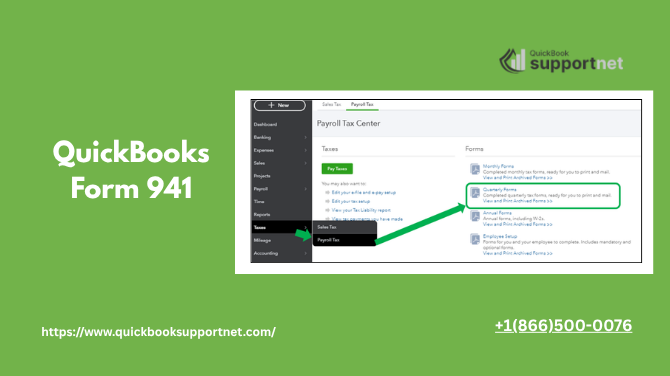
Go to Employees > Payroll Tax Forms & W-2s > Process Payroll Forms
Select Quarterly Form 941
Click Create Form
You will now see the IRS Form 941 window appear with your company’s payroll information automatically filled in.
Step 4: Review the Pre-Filled Data
QuickBooks Desktop automatically populates Form 941 using your payroll records. Review all pre-filled information, such as:
Total wages and tips paid
Federal income tax withheld
Social Security and Medicare taxes
Adjustments for sick pay or tips
Carefully verify every field to ensure accuracy before filing. Incorrect information could lead to IRS rejections or penalties.
Step 5: Make Adjustments (If Required)
If you notice discrepancies or missing details, you can manually adjust them in the form. Double-check for:
Rounding errors
Incorrect wage entries
Missing employee payments
After making adjustments, click Check for Errors to validate your entries.
Step 6: File the Form
Once the information looks correct, you can choose one of the following options:
Option 1: E-File Form 941
QuickBooks Desktop allows direct electronic filing through the IRS system:
Click Submit Form
Follow on-screen prompts to sign and send it securely
You’ll receive a confirmation once the IRS accepts your submission.
Option 2: Print and Mail Form 941
If you prefer traditional filing:
Click Print for Your Records
Mail the signed form to the IRS address corresponding to your state
Be sure to include any necessary payment (if you owe taxes) along with the form.
Step 7: Save the Confirmation
After filing, QuickBooks Desktop automatically saves a copy of your Form 941. Keep this record for your business documentation and IRS compliance. It can be found under:
Employees > Payroll Tax Forms > Filing History
Common Errors While Filing QuickBooks Form 941
Sometimes, users encounter errors while preparing or submitting the form. Here are common issues and their solutions:
1. Incorrect Tax Table Version
Solution: Update your payroll tax tables before filing.
Navigate to Employees > Get Payroll Updates > Download Entire Update.
2. E-File Submission Fails
Solution: Check your internet connection and ensure your QuickBooks Desktop Payroll Subscription is active. Also, verify your EIN and IRS credentials.
3. Missing Payroll Data
Solution: Review the payroll summary for the quarter to ensure all paychecks are recorded correctly.
4. Form Rejection by IRS
Solution: Carefully read the IRS rejection notice. Common causes include incorrect company EIN, mismatched Social Security numbers, or invalid electronic signature credentials.
If you’re unsure how to fix such errors, call QuickBooks Payroll Support at +1(866)500-0076 for expert assistance.
Tips for Smooth Quarterly Filing
File on Time: Always file Form 941 by the due dates — April 30, July 31, October 31, and January 31.
Keep Backup Copies: Maintain both electronic and printed copies of all submitted forms.
Reconcile Payroll Reports: Ensure payroll summaries and tax liabilities match before submission.
Use Direct Deposit Records: Double-check employee payments against payroll entries.
Consult Experts When Needed: Tax compliance errors can be costly, so don’t hesitate to reach out for help.
Advantages of Using QuickBooks Form 941
Using QuickBooks Form 941 offers multiple benefits beyond simple filing:
Accuracy: Automated tax computations minimize errors.
Speed: E-filing ensures faster IRS acceptance.
Convenience: All data is stored within your accounting software.
Security: Your financial and payroll data is encrypted and safe.
Compliance: QuickBooks automatically adapts to IRS updates and new tax laws.
When to Seek Professional Help
If you face repeated IRS rejections, complex payroll issues, or data mismatches, it’s best to consult a QuickBooks-certified expert. Professionals can remotely guide you through filing, form validation, and reconciliation.
Call +1(866)500-0076 to get direct help from a QuickBooks Desktop Payroll Specialist who can ensure your Form 941 is filed correctly and on time.
Conclusion
Filing QuickBooks Form 941 in the Desktop version is a crucial step for maintaining tax compliance and accurate payroll reporting. QuickBooks simplifies the process with built-in automation, e-filing options, and detailed record management.
By following the steps above — updating payroll, reviewing data, and filing electronically — you can ensure a smooth quarterly filing experience.
If you encounter any difficulties while preparing or submitting your form, contact QuickBooks experts at +1(866)500-0076 for quick and reliable support.
For more detailed tutorials, troubleshooting tips, and tax compliance resources, visit QuickBooksupportnet — your trusted guide for all QuickBooks-related solutions.













Write a comment ...